

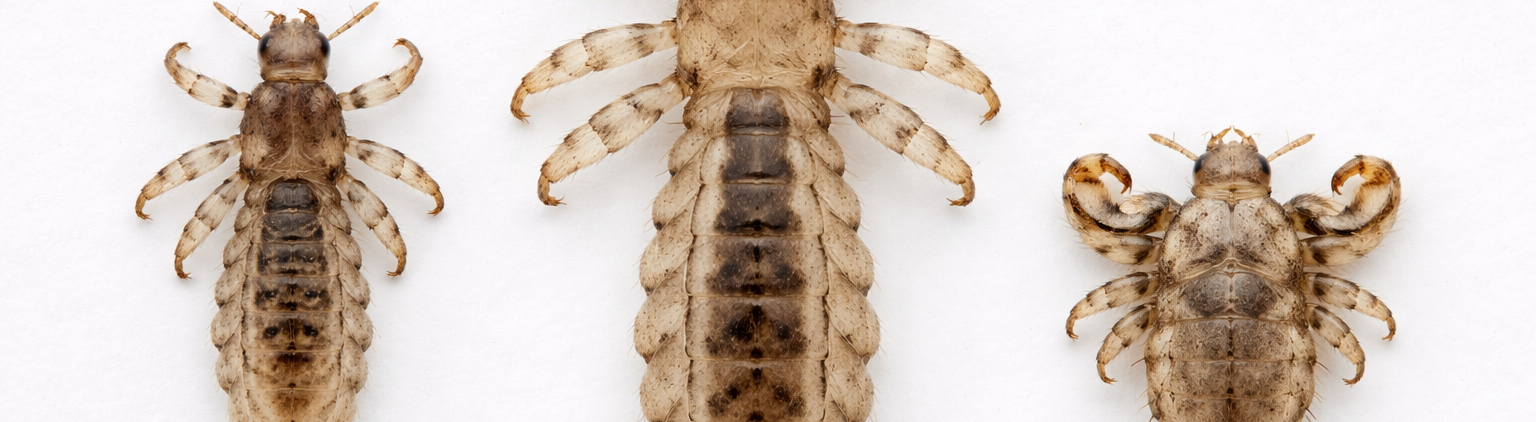
What are the 3 types of lice that affect humans?
Lice are small parasites that feed on blood and cling to hair or clothing. They cause itching and irritation and can spread quickly. Although all three are bloodsuckers, head lice, pubic lice, and body lice differ significantly in where they settle, what they look like, and how they should be treated.
Head lice
Head lice live on the scalp and lay their eggs close to the hair roots. They spread through direct head-to-head contact and cause itching and irritation. For detailed information on identifying and treating head lice, we refer to our blog on Head Lice, Head Lice Treatment, and Do I Have Head Lice?
Body lice
The body louse, scientifically known as Pediculus humanus corporis, is also called clothing louse. This type of louse is closely related to the head louse but differs clearly in lifestyle, size, and behavior. Body lice can survive in practice only under disrupted conditions where people cannot wash or change their clothing regularly. As a result, they are primarily found in situations of poverty, war, homelessness, or emergency shelters. This strong association with poor hygiene has over time contributed to an unfair stigma around head lice; people with head lice are often mistakenly considered “unclean” or dirty, whereas head lice are independent of hygiene and can infest anyone.
In appearance, body lice resemble head lice: they have an elongated, flat body and six legs that allow them to grip firmly. Body lice are, however, larger, averaging three to four millimeters, while head lice usually measure two to three millimeters. They are often light brown to grayish-white and appear somewhat transparent. After feeding on blood, their color can darken. Unlike head lice, body lice live almost exclusively in clothing, particularly in seams and hems, and only temporarily move to the skin to feed. Their eggs are deposited in clothing fibers, not attached to hair.
This lifestyle makes the body louse unique and explains why this species can transmit diseases. Body lice excrete bacteria through their feces, such as Rickettsia prowazekii, Bartonella quintana, and Borrelia recurrentis. Scratching causes small skin lesions through which these bacteria can enter the body. Their aggressive feeding behavior, high numbers in disrupted conditions, and ability to host bacteria internally for extended periods make body lice effective vectors for serious infections, something that does not occur with head or pubic lice.
In modern, hygienic societies, body lice almost completely disappear once clothing is washed and replaced regularly, greatly reducing the risk of disease transmission. Their presence is therefore not only a hygiene issue but also an indicator of social and living conditions where people have prolonged lack of access to clean textiles and adequate washing facilities.
Pubic lice
Pubic lice, scientifically known as Pthirus pubis, attach to coarse, stiff hair. Their body is compact and round, with broad gripping legs, giving them a crab-like appearance, hence their English nickname “crabs.” They are smaller than head and body lice, averaging 1 to 2 millimeters in size, and are usually light brown. Adult pubic lice are visible to the naked eye and move slowly over hair or skin. Their eggs, also called nits, are attached to hair with a kind of adhesive and are slightly lighter in color. They are mainly found in pubic hair but can also settle in other coarse body hair in adults, such as chest hair, armpit hair, back hair, arm hair, leg hair, and even beard hair.
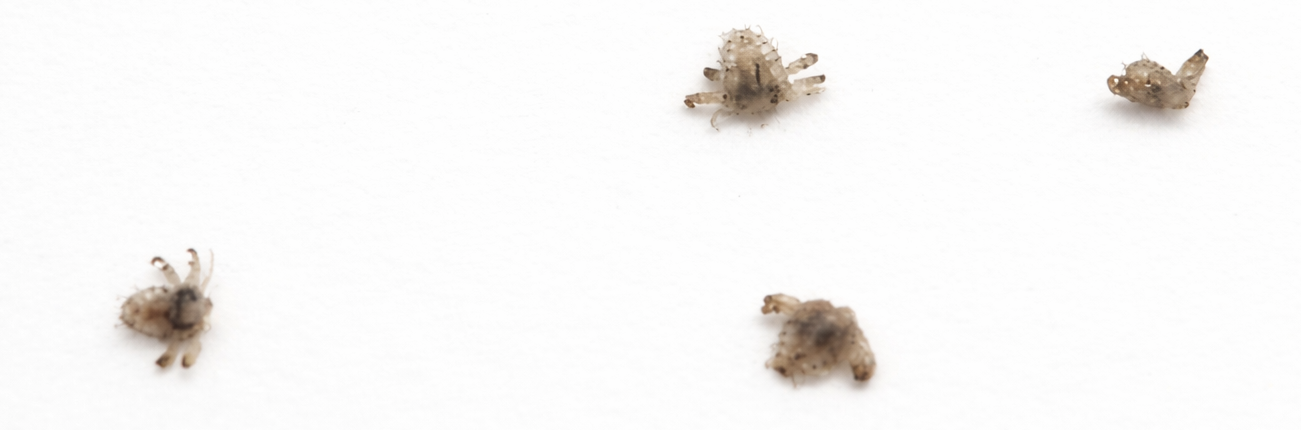
Pubic lice are not disease vectors. They feed on blood, causing itching and skin irritation, and sometimes minor bruising when multiple lice are active and the skin is scratched frequently. Unlike body lice, pubic lice do not spread through clothing but only through close physical contact. Although theoretically transmission via towels or bedding is possible, in practice it is negligible, especially when the hair has been removed.
Transmission and infection in adults
In adults, pubic lice infestation is mainly caused by close physical contact, often sexual, though skin-to-skin contact can also be sufficient to transfer lice. Anyone with coarse, rough body hair can become infested; lice do not discriminate by age or hygiene. Because they attach to hair, contact with infested hair is essential for transmission. The number of lice in an infestation is usually limited but can increase with prolonged contact or multiple infected partners.
In children and adolescents
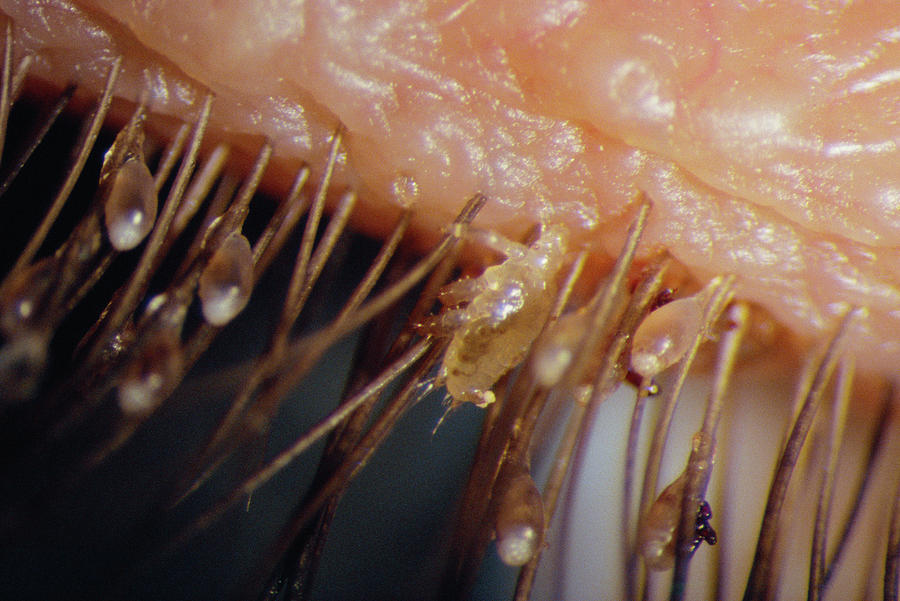
In children who already have body hair, such as underarms or the pubic area, the same principles apply: close contact is the main route of transmission. In young children who have little or no body hair, pubic lice can sometimes settle on eyelashes, eyebrows, and in rare cases on scalp hair. In these cases, the infestation is difficult to notice because it does not occur in the classic pubic area. The lice and their eggs mainly cause itching and irritation around the eyes. Because eyelashes and eyebrows are delicate, the eggs must be carefully removed with tweezers. It is important to do this calmly and precisely to avoid damaging the skin or eyes. Chemical treatments such as permethrin or anti-lice shampoos are absolutely unsuitable for eyelashes and eyebrows due to the risk of eye injury.
Treatment of pubic lice in adults
The most effective and reliable treatment of pubic lice in adults is complete shaving of all body hair from top to bottom. This includes chest hair, back hair, armpit hair, arm hair, leg hair, beard hair, and pubic hair. Once the hair is removed, lice can no longer grip, and the eggs cannot survive. The use of lice shampoos, lotions, or permethrin is unnecessary and barely effective; it may even give a false sense of security. Complete hair removal guarantees that lice and their eggs are fully eliminated and that reinfestation via textiles is excluded.